




The Complete Guide to CNC Machining: Technology, Process, and Applications
Computer Numerical Control (CNC) machining stands as one of the most transformative manufacturing technologies of the modern industrial era. At its essence, CNC machining is a subtractive manufacturing process where pre-programmed computer software directs the movement of factory machinery and tools to shape raw material into finished products with exceptional precision . This technology has fundamentally altered how products are designed, prototyped, and manufactured across virtually every industrial sector, from aerospace components to medical devices and consumer electronics.
The evolution of CNC machining represents a quantum leap from traditional manual machining. Where once skilled machinists manually controlled lathes, milling machines, and grinders using handwheels and levers, today's CNC machines execute complex operations automatically based on digital instructions . This transition has not eliminated the need for human expertise but has transformed it—modern CNC machinists combine traditional knowledge of materials and cutting processes with proficiency in computer-aided design (CAD) and computer-aided manufacturing (CAM) software.
How CNC Machining Works
The CNC machining process follows a systematic workflow that transforms a digital design into a physical object. Understanding this workflow is essential for anyone involved in manufacturing, engineering, or product development.
Step 1: Designing the CAD Model
The journey begins with creating a detailed 3D model using CAD software such as SolidWorks, AutoCAD, or Fusion 360. This digital representation defines the part's geometry, dimensions, and critical features . The quality of this initial design directly impacts the success of the entire manufacturing process. Designers must consider not only the part's functional requirements but also manufacturability constraints—features that are impossible or prohibitively expensive to machine can doom a project before it begins.
Step 2: Converting CAD to CAM
Once the CAD model is complete, it moves to CAM software, which translates the geometry into machine-readable instructions. CAM software determines optimal toolpaths, cutting speeds, feed rates, and tool selections based on the material, part geometry, and machine capabilities . This step requires deep understanding of machining principles—improper toolpath selection can lead to excessive tool wear, poor surface finish, or even machine damage.
Step 3: Post-Processing and G-Code Generation
The CAM output must be post-processed into G-code, the universal language that CNC controllers understand. G-code consists of alphanumeric commands that control every aspect of machine operation: spindle speed, axis movement, coolant flow, and tool changes . A typical machining operation might involve thousands of individual G-code commands, each precisely coordinating machine movements to achieve the desired result.
Step 4: Machine Setup and Operation
Before machining begins, operators must properly set up the machine. This includes securing the workpiece using vises, fixtures, or clamps; installing the appropriate cutting tools; and establishing a reference point (known as workpiece zero or datum) that aligns the digital coordinate system with the physical part . Proper setup is critical—errors at this stage can ruin parts, damage equipment, or create safety hazards.
Step 5: Machining Execution
With setup complete, the machine executes the program, automatically changing tools, positioning the workpiece, and removing material according to the programmed instructions. Modern CNC machines can operate unattended for extended periods, with sensors monitoring tool wear, vibration, and temperature to ensure consistent quality .
Step 6: Inspection and Quality Assurance
After machining, parts undergo rigorous inspection to verify they meet specifications. This may involve manual measurement using calipers and micrometers, or automated inspection using coordinate measuring machines (CMM) that compare actual dimensions against the original CAD model . Statistical process control techniques track quality over time, identifying trends that might indicate tool wear or machine degradation before they cause rejects.
Types of CNC Machines
The term "CNC machining" encompasses a diverse family of machines, each optimized for specific operations and part geometries.
CNC Milling Machines
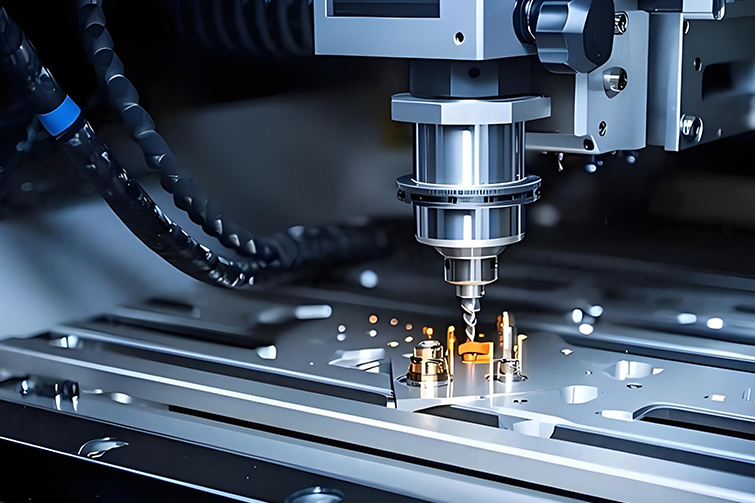
Milling machines use rotating multi-point cutting tools to remove material from a stationary workpiece. They can perform a wide range of operations including face milling, contouring, slot cutting, and drilling . Vertical machining centers feature spindles oriented vertically and are the most common configuration for general-purpose machining. Horizontal machining centers offer better chip evacuation and are preferred for high-volume production. Five-axis machining centers add rotational axes that enable complex geometries in single setups, reducing lead times and improving accuracy .
CNC Lathes and Turning Centers
Lathes rotate the workpiece while stationary cutting tools shape it, creating cylindrical features. Modern CNC turning centers can perform multiple operations including turning, facing, threading, and grooving . Live tooling capabilities allow milling operations on rotated parts, enabling complete machining of complex components without secondary operations. Swiss-type lathes excel at producing small, intricate parts for medical and electronics applications .
CNC Grinding Machines
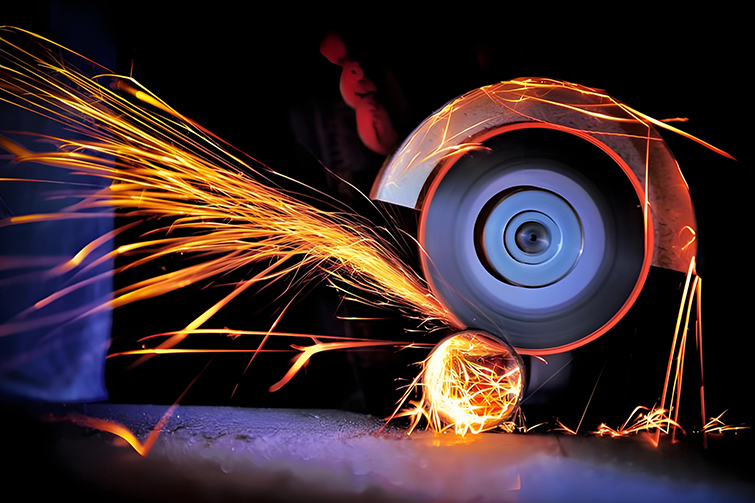
Grinding machines use abrasive wheels to achieve exceptional surface finishes and tight tolerances. Surface grinders produce flat surfaces, cylindrical grinders create precision round features, and centerless grinders handle high-volume production of small diameter parts . Grinding is often the final operation for parts requiring the highest precision.
Electrical Discharge Machines (EDM)
EDM machines remove material using electrical sparks rather than mechanical cutting. Wire EDM uses a thin electrified wire to cut complex contours through conductive materials, while sinker EDM creates cavities by eroding material with shaped electrodes . These machines excel at producing intricate features in hardened materials that would be difficult or impossible to mill.
Materials for CNC Machining
CNC machining accommodates an extensive range of materials, each with distinct characteristics that influence machining parameters and final part properties.
Metals
Aluminum alloys combine excellent machinability with good strength-to-weight ratio, making them the most commonly machined materials. 6061 aluminum offers versatility for general applications, while 7075 provides higher strength for aerospace and racing components . Stainless steels provide corrosion resistance and strength but require careful attention to cutting parameters due to work-hardening tendencies. 303 stainless offers improved machinability, while 316 provides superior corrosion resistance . Steel alloys including 1018, 1045, and tool steels like D2 and A2 deliver high strength and wear resistance for tooling and mechanical components. Titanium alloys offer exceptional strength-to-weight ratio and biocompatibility but challenge machinists with low thermal conductivity and high chemical reactivity . Brass and copper provide excellent electrical conductivity and machinability for electrical and decorative applications.
Plastics
Engineering plastics offer lightweight, corrosion-resistant alternatives to metals. Acetal (Delrin) provides dimensional stability and low friction for precision mechanical parts. Nylon offers toughness and wear resistance but absorbs moisture that can affect dimensions. Polycarbonate delivers impact resistance and optical clarity for transparent components. PTFE (Teflon) provides exceptional chemical resistance and low friction but challenges machinists with its softness and thermal sensitivity . Acrylic (PMMA) offers optical clarity and weatherability for displays and lighting applications.
Exotic Materials
Advanced industries increasingly demand components from difficult-to-machine materials. Inconel and other superalloys maintain strength at extreme temperatures for turbine engines and chemical processing. Ceramics offer hardness and thermal resistance but require specialized diamond grinding. Composites combine fibers in matrix materials, delivering tailored properties but presenting challenges with delamination and abrasive wear .
Advantages and Limitations of CNC Machining
Advantages
CNC machining offers exceptional precision, with modern machines achieving tolerances of ±0.025 mm or better . Once programmed, CNC machines produce identical parts repeatedly, essential for interchangeability and assembly . The process accommodates virtually any geometry that can be modeled in CAD, from simple blocks to complex organic shapes . Modern CNC machines operate with minimal supervision, often running lights-out during nights and weekends . CNC machining works with the widest range of materials of any manufacturing process .
Limitations
CNC machining generates significant material waste, as the process removes material rather than adding it . Initial investment in machines, tooling, and programming can exceed $100,000 for production-capable equipment . Complex parts may require multiple setups and operations, increasing lead time . Some internal features are impossible to machine due to tool access limitations . While efficient for production, per-part costs remain relatively constant, unlike molding processes where per-part costs decrease with volume .
Conclusion
CNC machining represents the backbone of modern precision manufacturing, combining computer control with traditional machining principles to produce components that define our technological world. Understanding its capabilities and limitations enables engineers, designers, and business leaders to make informed decisions about product development and manufacturing strategy. As technology continues advancing toward greater automation, intelligence, and integration, CNC machining will remain essential to industrial innovation.