




The Future of CNC Machining: 2025 Trends and Beyond
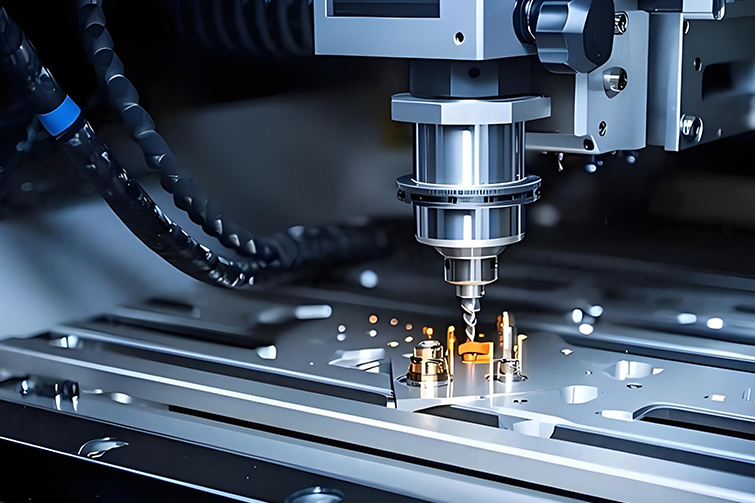
CNC machining has long been the foundation of precision manufacturing, but the pace of change heading into 2025 and beyond is unprecedented. As artificial intelligence becomes embedded in production, sustainability gains boardroom priority, and skilled labor shortages persist, machining leaders must rethink how they plan, program, and optimize their operations . This article explores the major trends shaping the future of CNC machining, offering insights into how forward-looking manufacturers are preparing for what lies ahead.
Trend 1: AI Integration in Machining Operations
Artificial intelligence is transitioning from experimental pilots to integral components of daily machine control and planning. AI-driven machining uses real-time sensor feedback to automatically adjust feeds, speeds, and toolpaths in response to vibration, load, or temperature changes . The result is more consistent surface quality, lower tool wear, and fewer production interruptions .
Practical AI Applications
Rather than pursuing fully autonomous machining, most current AI implementation focuses on practical applications with immediate return on investment. Tool-wear detection systems analyze spindle load, vibration signatures, and acoustic emissions to predict when tools require replacement before they cause part quality issues . Predictive maintenance algorithms monitor machine health indicators to schedule service before unexpected breakdowns occur . Cutting-parameter recommendations based on historical data help less-experienced programmers achieve results approaching expert levels . In-process quality monitoring identifies deviations as they occur, enabling real-time correction rather than post-process inspection .
The Evolving Machinist Role
AI integration is redefining the machinist's role. Future operators will spend less time reacting to machine alarms and more time validating data patterns, tuning algorithms, and improving process reliability . This shift requires new skills combining traditional machining knowledge with data analysis and software proficiency. Training programs must evolve to prepare the workforce for this augmented manufacturing environment.
Trend 2: Digital Twins and Simulation
Digital twins—virtual representations that mirror physical machining processes—are maturing into comprehensive ecosystems that simulate entire production workflows. Rather than merely visualizing toolpaths, modern digital twins integrate design, process engineering, machining, and inspection into continuously updated models .
Benefits of Virtual Manufacturing
The value proposition of digital twins becomes compelling when considering the cost of errors. Virtual commissioning allows new production lines to be debugged before any equipment is installed . Clash detection identifies potential collisions between tools, fixtures, and workpieces before they cause damage . Kinematic validation ensures that complex multi-axis movements are achievable as programmed . Thermal simulation predicts how machining heat will affect part dimensions, enabling compensation before cutting begins .
Integration with Mixed Reality
Factories are beginning to pair digital twins with mixed-reality tools, enabling virtual training and remote support. New operators can practice setups and operations in safe virtual environments before touching expensive machines . Experienced machinists can guide junior colleagues through complex procedures using augmented reality annotations overlaid on actual equipment . Global teams can collaborate around virtual machines, reducing travel costs and accelerating problem resolution .
Continuous Improvement Through Feedback
The digital twin's true power lies in its feedback loop—real machining data continuously refines simulation accuracy, making each production cycle smarter than the last. Machine learning algorithms analyze discrepancies between predicted and actual results, improving future simulations . This capability transforms process development from reactive troubleshooting to proactive optimization.
Trend 3: Hybrid Manufacturing Technologies
Additive and subtractive processes are converging rapidly. Once viewed as competing technologies, hybrid manufacturing—where a single platform combines metal deposition with CNC cutting—is gaining traction in aerospace, energy, medical, and maintenance applications .
Capabilities Enabled by Hybrid Manufacturing
This evolution addresses two long-standing manufacturing challenges. First, material waste is significantly reduced as additive processes build near-net shapes while machining finishes critical features. Second, complex geometries become achievable as hybrid enables internal channels, lattice structures, and conformal cooling paths impossible to cut conventionally . Repair applications benefit particularly—worn components can be rebuilt additively then remachined to original specifications, extending service life .
Implementation Challenges
For machinists, hybrid manufacturing introduces new challenges requiring additional expertise. Heat-affected zones from additive deposition affect material properties and subsequent machining . Unfamiliar alloys designed for additive processes behave differently during cutting . Irregular as-deposited surfaces complicate tool engagement and require adaptive strategies . Shops that master hybrid workflows early will secure competitive advantages as customers demand lighter, more efficient, and customized components .
Trend 4: Sustainability in Machining
Sustainability is increasingly embedded in machining KPIs rather than confined to corporate reports. Environmental performance is now tied directly to operational efficiency and customer value, with customers increasingly asking for carbon-footprint data per part .
Sustainable Practices
Manufacturers are adopting various practices to reduce environmental impact. Minimum Quantity Lubrication (MQL) systems apply tiny amounts of lubricant directly to the cutting zone, eliminating coolant disposal costs and health concerns . Dry cutting techniques use tool coatings and optimized parameters to machine without any lubricant . Coolant recycling systems extend fluid life and reduce waste volumes . Machine tools are being redesigned for lower idle power draw, automatically powering down subsystems when not in use . Material recycling—particularly of expensive alloys like titanium and nickel—is becoming standard practice, with chips and scrap segregated and returned to material suppliers .
Business Case for Sustainability
Sustainable machining aligns environmental responsibility with economic benefits. Reduced energy consumption directly lowers operating costs . Extended tool life from optimized parameters reduces consumable expenses . Eliminated coolant purchases and disposal fees improve profitability . Enhanced brand credibility with environmentally conscious customers creates market differentiation . As regulatory pressure increases and carbon pricing expands, sustainable practices will become essential for market participation .
Trend 5: Automation and the New Machining Economy
Labor shortages, geopolitical risks, and logistics disruptions have accelerated reshoring—bringing production closer to home markets. To offset higher labor costs in developed economies, manufacturers are investing heavily in automation and digital coordination .
Automation Beyond Machine Tending
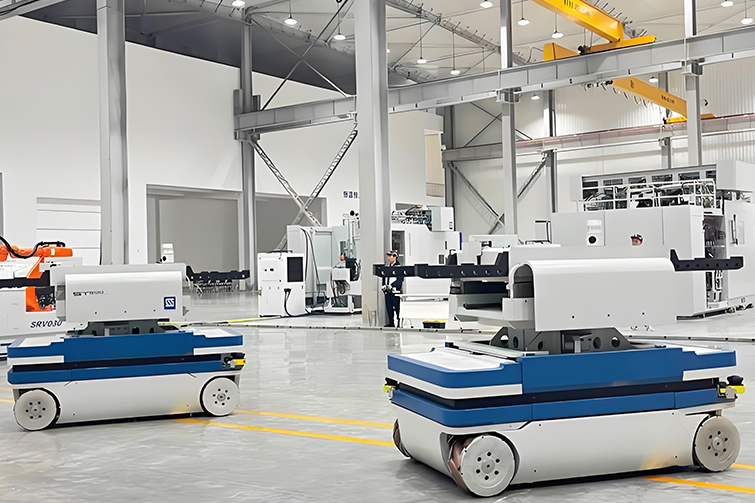
Robot-tended CNC cells, automated pallet changers, and self-calibrating tool presetters are becoming the norm. The goal is lights-out machining: continuous, unmanned production supported by smart scheduling and remote monitoring . However, forward-thinking shops are applying automation to surrounding steps, not just machine tending. Support-process automation for tasks like pressure testing, washing, drying, and inspection reduces queue time, handling, and quality risk across the entire process .
Data Integration Requirements
Making this level of automation viable requires sophisticated data integration. Machines, planning systems, and inspection devices must share a common data language so that part quality, utilization, and tool wear can be tracked automatically . Manufacturing Execution Systems (MES) coordinate workflow across automated cells, ensuring that work arrives when machines are available and that completed parts move efficiently to subsequent operations .
Amplifying Skilled Labor
This new wave of automation is less about replacing workers and more about amplifying skilled labor. One technician can oversee several automated machines, interpret analytics, and manage exceptions rather than performing repetitive loading tasks . This addresses demographic challenges by enabling experienced machinists to contribute more value while attracting younger workers who prefer technology-rich environments.
Trend 6: Advanced Cutting Tools and Materials
Cutting tool technology continues advancing to enable higher productivity and new capabilities. Tool materials, geometries, and coatings evolve to address the challenges of modern manufacturing .
Tool Material Innovations
Polycrystalline diamond (PCD) tools maintain sharpness when machining abrasive materials like carbon-fiber composites and high-silicon aluminum . Cubic boron nitride (CBN) provides an economical alternative to diamond for machining hardened steels . Ceramic inserts enable high-speed machining of superalloys at temperatures that would destroy carbide tools . Nano-layered coatings reduce friction and increase tool life through architectures engineered at molecular scales .
Geometric Advancements
Tool geometries become increasingly sophisticated. Variable helix and variable pitch designs disrupt harmonic vibrations that cause chatter . High-feed milling cutters maximize material removal rates by distributing forces axially rather than radially . Micro-tools with diameters below 0.1 mm enable micromachining of features for medical and electronic applications .
Trend 7: Workforce Development and Knowledge Transfer
The manufacturing skills gap remains a critical concern, with experienced machiners retiring and fewer young people entering the trade. Forward-thinking companies are investing in structured approaches to workforce development .
Training and Apprenticeship Programs
Effective training combines traditional hands-on experience with modern learning methods. Structured apprenticeships provide progressive skill development under experienced mentorship . Virtual reality training allows safe practice of setups and operations before touching production equipment . Cross-training ensures critical knowledge is distributed across the team rather than concentrated in a few individuals . Documentation of best practices captures tribal knowledge before it walks out the door with retiring workers .
The Evolving Skill Set
Tomorrow's machinists need expanded capabilities beyond traditional machining knowledge. Data literacy enables interpretation of the information streams generated by modern equipment . Software proficiency spans CAM programming, simulation, and production monitoring tools . Problem-solving skills remain essential when automated systems encounter unexpected situations . Communication abilities facilitate collaboration across engineering, quality, and management functions .
Conclusion
The trends shaping the future of CNC machining reflect an industry in transformation. From AI integration and digital twins to hybrid manufacturing and sustainability, manufacturers are leveraging technology to build more resilient, efficient, and intelligent operations. The factories that thrive will treat every machine cycle as a data event—captured, analyzed, and used to improve the next . Precision manufacturing is entering an era where the cutting edge is digital as much as physical, with success determined by the ability to integrate human expertise with technological capability. For companies that embrace these changes, the future offers unprecedented opportunities for innovation, growth, and competitive advantage.